Showing posts with label corruption. Show all posts

Tuesday, February 1, 2011

Egypt, Tunisia, Thailand... Top 10 destinations for Social Upheaval

A Tide of civil unrest has swept through at least 11 nations in just the past week.  Media focus has been on the successes of the "Jasmine Revolution" and developments in Egypt, which is populous, geopolitically significant, and in total upheaval; but nations far and wide are experiencing mass-protests and anti-government demonstrations. 


Cairo, January 25 2011 by Muhammad*#
The underlying cause connecting all of these movements is the political and economic disenfranchisement of large majorities and groups of people within their nations.  It could be that what now is being witnessed will be seen broadly as a sociological reaction to generally poor ongoing conditions which became exacerbated by ongoing effects of a global economic crisis and major moves in global food and fuel inflation.  This situation has threatened a future of abject poverty and destitution on large populations of working poor, unemployed, pensioners, students, small business operators, professionals; anyone with debts or low incomes.  In these conditions, any political or economic event can become a symbol of repression which people begin to rally against, venting their anger and will to change in street demonstrations and violent confrontation with security forces. 

While the list is dominated by the Middle-East/African-Arab speaking nations of Egypt, Jordan, Yemen, Tunisia, Algeria and Lebanon, there is representation from the Sub-Sahara in Cote D'Ivoire and Ghana, as well as Europe and Asia with Albania, Bangladesh and Thailand.  In no particular order:


JORDAN
Last Friday saw thousands of protestors marching in Jordan, and was the 3rd consecutive day-of-prayer protest.  Jordan fits the same profile as the other Arab countries in upheaval: A large population mainly below the age of 30, under the strain of rising prices and unemployment, facing a lifetime of economic deprivation and political disenfranchisement.  Today, February 1, King Abdullah has dismissed his cabinet and prime minister.  His appointment of former general and PM Marouf Bakhit as the new Prime Minister will likely be seen as an empty gesture, as Bakhit is an entrenched member of the political class who was already PM from 2005-2007.


EGYPT
The Egyptian government, led for 30 years by Hosni Mubarak, on January 28 shut down all cell-phone and internet access as it faced popular calls for him and his government to step down during consecutive days of demonstrations.  The entire Presidential cabinet has been purged and restaffed.  Sources put today's crowds at million strong just in Cairo. Transportation has been severly restricted and night-time curfews are in place but ignored.  Protestors have occupied buildings, and the army has refused to use violent coercion against the people whose demands it views as "legitimate."  This represents a major break from President Mubarak, who is himself a former Air Force Commander and Chief of Staff.  Clashes between demonstrators and security forces have cost more than 125 lives.  The protests began in earnest on January 25, a date on which the government annually commemorates the police.  Activists organised for that day a massive apolitical demonstration against police brutality, dubbed the "day of rage."  The protests, unified by the rally-call "Kefaya!" (Enough!) have gathered momentum and are ongoing at the time of publication.


LEBANON
Angry demonstrations hit the streets of Beirut and elsewhere in Lebanon on January 25.  Politics remain as a constant catalyst to demonstrations and unrest in Lebanon, a country which has felt the brunt of 2 wars in the past 3 decades.  Lebanese society faces a lack of housing and vital state infrastructure, unemployment and rising prices, a factionalised society along religious, sectarian and political lines, and the constant threat of renewed war from its southern neighbor Israel. 


YEMEN
Near daily protests since mid January in Yemen and the capital Sanaa have seen calls from tens of thousands for the ouster of 32-year President Ali Abdullah Saleh.  Yemen is an extremely poor nation, located at the southern tip of the Arabian peninsula and across the gulf of Aden from Somalia.  America has called Yemen an Al-Qaeda haven and has been making drone attacks inside the country.  The country has already been coping with open revolt from rebel and separatist movements.  With war, corruption, high unemployment and rising prices plaguing the nation, thousands of people with nothing to lose have turned out to demand rights, justice and new government.  One man, Fouad Sabri, lit-himself on fire in an attempted suicide protest, immitating the act which sparked the Tunisian uprising. 


ALGERIA
Rioting and protests have continued to errupt for over a month as economic turmoil engulfs the country.  Algeria has suffered for a long time with a housing shortage, and the young population is acting out against their impoverished living conditions, rising prices and lack of economic opportunity.  Abdelaziz Bouteflika, the 12-year president, has vowed to quash the unrest; along with employing security forces he has put in place a cooking fuel subsidy and has also ordered major purchases of wheat with the hopes of holding domestic food prices down. 


TUNISIA
A month of protests which saw the ouster of Tunisia's 23-year president, Zine El Abidine Ben Ali, continue into their 6th week after being dubbed the "Jasmine Revolution."  Sparked by the suicide protest of Mohammed Bouazizi on Dec 17th, general strikes and protests against indignity, police brutality, organised corruption and generally lacking rights and freedoms continue.  Security forces, out of seeming habit or acculturation, continue to use deadly violence against the crowds, who are now specifically calling for the president's former cronies to resign their posts in various state ministries and the interim government. 


BANGLADESH
Bangladesh is experiencing violent demonstrations as its stock market is rapidly collapsing.  Since a previous report about it here at World Headlines Review, more street violence has been seen as markets hit new lows and stability has failed to return.  Trading was again halted on the Dhaka exchange for a third time, on January 20, to stop rapid and massive declines which threatened a total collapse of stock values.  In a seemingly unrelated story, the AFP reports that a police officer was killed and several police and civilians seriously injured in protests which saw 20,000 villagers fighting against the appropriation of their land by the government.  For the masses of Bangladeshis, it seems there is no safe place to put your savings, be it stocks or real-estate. 


ALBANIA
A country of some 3 million people on the Mediteranean coast of Europe, Albania's social unrest has expressed itself slightly differently from other nations.  Factions within the country have fought with each other and the police over political scandals and corruption.  On January 21, 3 civilians were killed when security forces fired on anti-government demonstrators.  At its core, the unrest is the result of the same rising prices, unemployment and rampant corruption that is swelling the ranks of the uprisings in many other nations.  


THAILAND
Anti-government protests by "red-shirts" and "yellow shirts" saw thousands of demonstrators occupying streets and neighborhoods in Bangkok this week.  The Thai government has been beset by protests for years now, from groups who seem to recognise no democratic forum for redress except direct action.  In December 2008 the Bangkok international airport was occupied by protestors, leaving many tourists stranded and creating international headlines.  Since then, protests continue largely in the absence of international attention.


GHANA
Thousands of people demonstrated in the capital of Accra and Kumasi on January 26, calling for government action against poverty and rising food and fuel prices.  The protests were peaceful.


COTE D'IVOIRE
In a poor country facing massive unemployment and inflation, a political crisis has sparked violence along social, political and ethnic lines.  The UN this week reported estimates of 260 deaths in the rapidly evolving situation.  Violence erupted when Laurent Gbagbo, the incumbent President, was defeated in a recent election.  Gbagbo has refused the election results and is pitting the ethnic and economic prejudices of his southern support base against the growing anger of the supporters of President-elect Alassane Ouattara. 


Cairo Police Line, January 25 by Muhammad*#
The above list briefly illustrates a number of locales experiencing unrest right now or in the past week.  Haiti and Belarus are two more countries which could be added to the list if the timeframe was widened to the past month.  Both countries have been mired in violent protest against corruption and anti-democratic government.  In all of these countries, where there are little to no rights or freedom to associate, to gather publicly, to speak one's opinion vocally, where there are no democratic venues for ordinary people to make themselves heard and to seek redress, the only option is to defy the law, defy curfews, and face tear-gas, batons and bullets in the streets. 

What seemed to happen first in Tunisia may yet inspire more people to take to the streets, but what is actually happening will continue as long as there is a reason: People facing a bleak future, with little to lose and everything to gain, finding common cause with each other and searching for hope and the power to shape their own destiny


Street-battles in Cairo


Read Sources On:  Egypt  - Lebanon  - Thailand1  - Thailand2  - Cote D'Ivoire1  - Cote DI'voire2  - Ghana1  - Ghana2  -  Albania1  - Albania2  - Bangladesh1  - Bangladesh2  - Yemen1  - Yemen2  - Yemen3  - Algeria  - Jordan 1  - Jordan 2

Friday, January 21, 2011

Basra and Iraq: Oil and Expectations

A strange portrait of the Southern-Iraqi city of Basra is painted in a recent and brief Economist article.  Better than Baghdad struggles to find real evidence of improvement of quality of life or opportunity in Basra, which is Iraq's international oil and shipping hub and home to a large disenfranchised Shia population.

Basrawi Street by 17th Fires Brigade
The Economist compares the situation in Basra of three years ago, "when anti-Western Shia militia controlled the streets," with the "more business friendly" Basra of today.  With the view confined to this time frame, that the city continues to exist at all could be an improvement, given that the city in 2008 was torn apart in the "Battle of Basra" or "Operation Charge of the Knights" which saw a week of coalition airstrikes and street battles before a ceasefire with Muqtada al-Sadr and the Mahdi Army was negociated.  That "terrorist attacks are a monthly rather than daily horror" is also presented as an improvement, though "monthly" seems an exagerated infrequency.

The article describes the area around Basra as a "geological El Dorado," duly noting that the Rumaila and West Qurna oil deposits, when discovered, combined as "the second-biggest oil field in the Middle East."  Such wealth has gone largely untapped as wars and international sanctions prevented Saddam Hussein from bringing the surrounding oil fields into efficient production.  The opportunity that this presents, it would seem to the Economist, is the obvious catalyst to prosperity in Basra, as its first evidence of an "improving" situation is that "BP signed a technical-services contract for Rumaila last year... it's operations, together with its partners from Chinese and Iraqi state-owned oil companies, are gaining momentum." 

The article conveys a number of interesting images: "People eat juicy prawns in restaurants... sometimes sitting out past midnight on the balmy banks of the Shatt al-Arab; it is still unthinkable in Baghdad to relax on the edge of the Tigris... A smart hotel with a conference centre has just opened... Emirates airline is set to begin daily flights next year... sales of flashy cars have been soaring... the price of taxis and meals in good restaurants have been shooting up."  Certainly such scenes are confined to the centre of the city, where there are small enclaves of middle class wealth among a larger 'other-half'.  It describes a recent oil-and-gas conference where managers from Halliburton and a Mercedes-Benz dealer "rubbed shoulders" with average Iraqi businessmen looking for opportunities to provide local logistical support.  It would seem that Operation Iraqi Freedom and the Battle of Basra have indeed secured some type of opportunity for Iraqis; to tap a Reaganomic trickle from foreigners busily appropriating Iraq's natural wealth.

Upon describing such dubious "improvements," The Economist does not fail to admit how bad the overall facts of life in Basra are, seven years after the fall of Saddam Hussein:  "The dusty roads into the city pass miles of slums.  The canal that goes through the centre is stinking and stagnant.  The council was promised a dollar for every barrel of oil produced in the province but the cash has yet to be seen.  Many development projects have stalled... the number of jobs on offer has only slightly increased... Most foreign businessmen from Europe and America still prefer to lodge on a military base several miles outside the city, where they are still occasionally subjected to mortar fire."  The piece concludes with the ignominious statement: "Basrawis are being warned against having unrealistic expectations."  One is left to wonder what type of expectations in such conditions are unrealistic?  Any expectations of average Basrawis are in any case likely tempered by the daily news, such as the recent January 14th escape of twelve Al-Qaeda members who walked out of a fortified Basra jail wearing police uniforms; sprung from captivity by corrupt guards, Al-Qaeda infiltration of local authorities and higher authorities in Baghdad.  The jail's entire staff has been under arrest pending the full investigation.  Such corruption and displays of influence and power by terrorist groups are sure to remind the people of Basra that arrivals by Mercedes-Benz to riverside Shrimp-cocktail parties is not in the offing for all.


Read the Economist article:
http://www.economist.com/node/17633299

Read about the Basra Al-Qaeda jail-break:
http://www.thenational.ae/news/worldwide/middle-east/escaped-iraqi-al-qaeda-prisoners-had-inside-help
http://www.reuters.com/article/idUSTRE70D47P20110114

Tuesday, January 4, 2011

Panem et Circenses South African Style

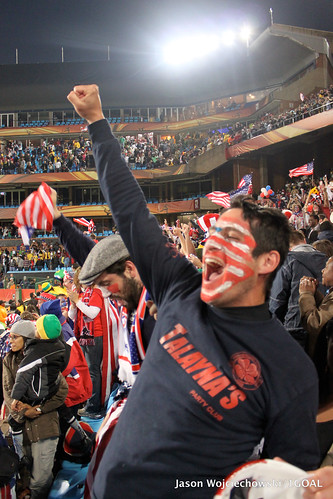
USA v Algeria, 2010 World Cup by jasonwhat
A recent Sports Illustrated article, World Cup's Empty Legacy, reports on the state of South Africa's sports infrastructure several months after this summer's final.  While the 2010 World Cup was as much a success as any other in bringing together people from all corners of the globe, the piece helps to highlight a comedy of errors and lack of foresight which may in the end taint the image of FIFA and the other political bodies that organized the competition.   Further study into the issue turns up questions as to deep corruption and even murder.

In planning the construction of new stadiums, it is evident there was little consultation with local sports organisations who would in future be potential clients of the new facilities.  Rugby teams have avoided moving out of their smaller venues to these larger stadiums for a variety of predictable economic reasons, while cricket teams cannot even begin to contemplate moving, as in a literally monumental demonstration of ineptitude, the new stadiums were designed and built so that the dimensions of a cricket field will not fit within the new stadium's playing areas.  Cricket and Rugby are both more commercially successful in South Africa than soccer; a sport whose local teams count spectators in the hundreds, rather than the tens-of-thousands required to fill the new and refurbished venues.  Many in South Africa are wondering how it is possible that these stadiums sit empty most nights, when $1.3 billion was spent alone on upgrading and building them.

The Cape Town Stadium was built at Green Point on the site of an older much smaller stadium, after much controversy.  Green Point is a middle-class suburb, whose cleanliness and relative modernity would make it more attractive to tourists attending the World Cup; however, many Green-Point residents opposed the building, and a wider group of locals wondered aloud why a soccer stadium would not be built much closer to the poorer neighborhoods which house Cape Town's actual soccer fans.  The SI article, printed November 22, 2010, reveals that only 3 events have been held at the stadium since the close of the World Cup.  Furthermore, it states that "the company due to take over the stadium's 30-year lease on Nov. 1 pulled out of the deal, forcing the city to cover maintenance costs of around $6 million a year."

The reality of empty stadiums unable to cover the costs of their own maintenance is not exclusive to Cape Town.  More than one stadium was built in rural areas whose populations will never support attendance of multiple thousands for regular domestic league sports events.  South Africans, half of whom according to the UK paper The Independent survive on an average of 130 pounds per month, are today largely unaffected by their government's spending spree on the world's biggest party, in spite of how jubilant they may have been portrayed by international media during the event.  The workers who built the stadiums, who were typically paid 19 pounds per week, must be wondering where the $1.3billion in stadium construction and refurbishment actually went.  While the South African townships and taxpayers are left with the construction debts and maintenance costs of the stadiums, FIFA had bagged $1.6billion from advertising and other sources before the tournament even began, profits which the South African government treasury was excluded from sharing in.  Local activists have accused FIFA, South African officials, and contractors of mafia style collusion in bullying opponents and municipal representatives toward their ends, with the murder of whistleblower Jimmy Mohlala being a prime example; a web search of this name reveals innumerable theories as to the sponsors of his assassination.

Politicians and FIFA representatives promised an event which would help to unify Africa and the world, which would boost Africa's economy and help to modernize and make South Africa a destination of international interest.  Instead the story of the logistics of the 2010 World Cup has, for many, reinforced the image of African leaders as corrupt and detached from their people, as well as the stereotype that rich white Europeans have no interest in Africa beyond economic exploitation.  With Russia and Qatar, two nations badly lacking in infrastructure and sports facilities, recently named as hosts for upcoming World Cups amid allegations of bribery and corrupt vote trading, the question remains:  Is the World Cup foremost a celebration of the world's most popular and transcending sport?  Or does its existence depend on the ability of certain elites to enrich themselves cynically at the expense of fans who truly abide by the ideals of harmony, unity and fair-play?


Google search for Jimmy Mohlala:
http://www.google.ca/#hl=en&expIds=17259,27757&xhr=t&q=jimmy+mohlala&cp=9&pf=p&sclient=psy&aq=0&aqi=&aql=&oq=jimmy+moh&gs_rfai=&pbx=1&fp=2c0b2ef780091f9e

Sports Illustrated World Cup's Empty Legacy article:
http://sportsillustrated.cnn.com/vault/article/magazine/MAG1177591/index.htm

Video:
http://www.youtube.com/watch?v=ibAthe-_5fI

More links:
http://www.independent.co.uk/news/world/africa/south-africas-world-cup-venues-are-white-elephants-1840958.html

http://www.nzherald.co.nz/sport/news/article.cfm?c_id=4&objectid=10650784


http://special.registerguard.com/csp/cms/sites/web/sports/25197365-41/rugby-south-cup-stadiums-africa.csp

http://www.guardian.co.uk/football/2010/jun/13/world-cup-stadiums-empty-seats

http://fourfourtwo.com/news/worldcup2010/40888/default.aspx

http://2010.mg.co.za/article/2010-05-14-no-one-wants-to-air-2010-documentary

Wednesday, December 22, 2010

Afghanistan: War, Power and Illusion

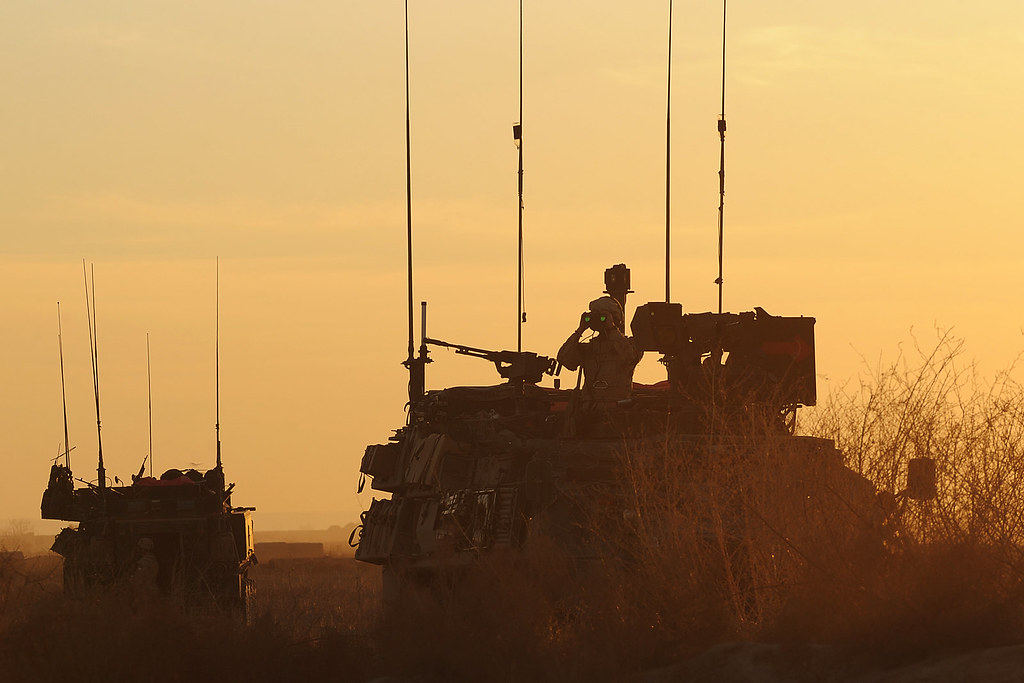
Canadian LAVs, Afghanistan, by isafmedia
This week, Project Censored has released its annual list of top 25 censored news stories in a volume entitled Censored 2011: The Top Censored Stories of 2009-2010.  An astounding article published by The Nation on November 11, 2009; How the US funds the Taliban, resurfaces as the main source for the 10th ranked censored story on the list.  Perhaps Project Censored and The Nation, and as usual the general public, have misunderstood the implications of what this story uncovers; that the West’s war and nation-building effort in Afghanistan is an exercise of utter self-deception and a complete failure. 

Recent coverage of the war in Afghanistan has surrounded revelations from the USG cables leaked by Wikileaks, which paint an endless landscape of deceptions, divided loyalties, corruption, depravity and laughable optimism in the face of virtual anarchy.  The incremental release of these documents by Wikileaks provides an ongoing stream of tidbits and fodder for headlines and public debate, especially as they concern Afghanistan; however, they so far have failed to create the mass of public interest and scrutiny required in the West to bring an end to the war.  That is a tragedy in light of the ongoing situation described a year ago in the Nation, which in spite of official representations, effectively demonstrates that NATO and the Karzai Government exert no authority anywhere in Afghanistan outside their fortified bases and government offices.

The article is entitled How the US funds the Taliban, and examines two sides of the same coin: “The first is the insider dealing that determines who wins and who loses in Afghan business, and the second is the troubling mechanism by which "private security" ensures that the US supply convoys traveling these ancient trade routes aren't ambushed by insurgents.”

While the corruption that defines the first of these realities is worth examination and condemnation, it is the implications of the second which are inescapable and final in their depth. 

The piece begins with a short bio of Ahmad Rateb Popal who is cousin to Hamid Karzai, a former Taliban official, mujahedeen fighter and a convicted drug trafficker who was released from Prison in the US in 1997.  He is now, along with his convicted drug-trafficking brother Rashid Popal, principally in control of the Watan Group, which is a consortium of communications, logistics and security companies in Afghanistan.  The Popal brothers are just the article’s introduction to the characters which fill positions of official and effective power in Afghanistan: “Welcome to the wartime contracting bazaar in Afghanistan. It is a virtual carnival of improbable characters and shady connections, with former CIA officials and ex-military officers joining hands with former Taliban and mujahedeen to collect US government funds in the name of the war effort.”

Private security firms in Afghanistan are most importantly charged in the defence of highway convoys which supply NATO’s network of bases with every last thing needed in the war effort; food to fuel to ammunition to toilet paper.  “The epicenter is Bagram Air Base, just an hour north of Kabul, from which virtually everything in Afghanistan is trucked to the outer reaches of what the Army calls "the Battlespace"--that is, the entire country.”

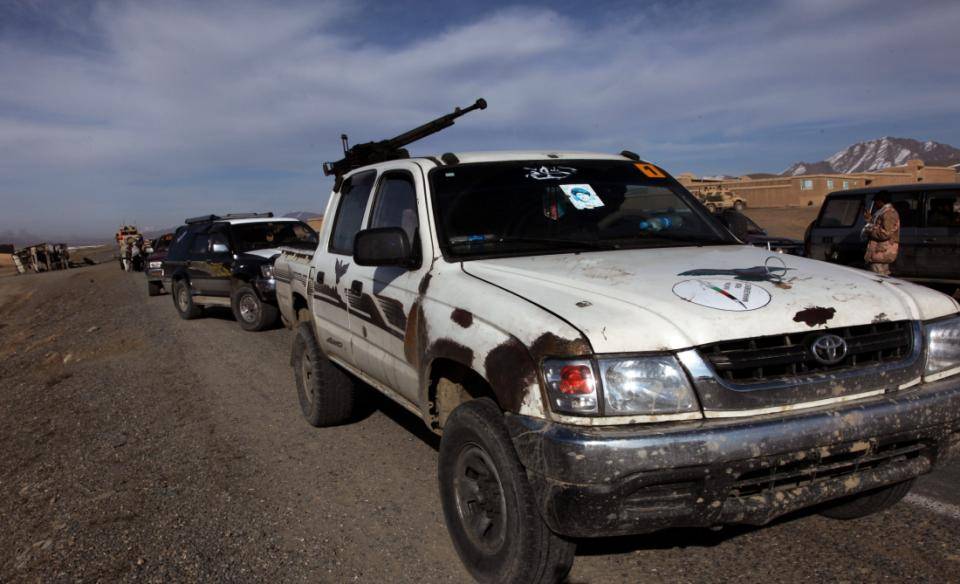
Private Afghan Security, by isafmedia
The article states, “The real secret to trucking in Afghanistan is ensuring security on the perilous roads, controlled by warlords, tribal militias, insurgents and Taliban commanders.”  It quotes an American executive: “The Army is basically paying the Taliban not to shoot at them. It is Department of Defense money;” Project Manager Mike Hanna, for trucking company Afghan American Army Services: “You are paying the people in the local areas--some are warlords, some are politicians in the police force--to move your trucks through... We're basically being extorted. Where you don't pay, you're going to get attacked. We just have our field guys go down there, and they pay off who they need to;” A veteran American manager who has worked as a soldier and a private security contractor in the field: “What we are doing is paying warlords associated with the Taliban, because none of our security elements is able to deal with the threat;” Transportation entrepreneur: “Two Taliban is enough... One in the front and one in the back.  You cannot work otherwise. Otherwise it is not possible.”

Apparently the term ‘private security company’ has in Afghanistan become something of a euphamism for Warlords and militia drawing from the deep well of Western taxpayer cash ‘intended’ to fund the stabilisation and reconstruction of the country.  “Every warlord has his security company,” is the way one executive put it to the article’s author, Aram Roston.  These ‘companies’ run by Afghan strongmen who find themselves in the favour of the corrupt Karzai administration, having divided loyalties and ulterior motives, must themselves hand over money to local powers to make the way secure along this or that highway. 

These private firms are so mistrusted by the US and Karzai, both because of their affiliations with the enemy and their own private interests which conflict with those of the Karzai family, are prohibited by law from arming themselves beyond AK-47 rifles.  In the face of Rocket-Propelled-Grenade attacks from insurgents targeting massive caravans of trucks, this seems much like trying to use brass-knuckles to protect a pack of antelope from attacking lions.

This problem is universal in Afghanistan, extending even to the most important highway there, aptly named highway 1.  The previously mentioned Watan group, run by the Popal brothers, is charged with securing this highway, the virtual jugular of the West's war complex in Afghanistan, which runs between Kabul and Bagram Airforce Base in the east; south-west toward Kandahar and the southern half of the country.  According to the article's author, "Watan's secret weapon to protect American supplies heading through Kandahar is a man named Commander Ruhullah.  Said to be a handsome man in his 40s, Ruhullah has an oddly high-pitched voice.  He wears traditional salwar kameez and a Rolex watch.  He rarely, if ever, associates with Westerners.  He commands a large group of irregular fighters with no known government affiliation, and his name, security officials tell me, inspires obedience or fear in villages along the road.  It is a dangerous business, of course: until last spring Ruhullah had competition--a one-legged warlord named Commander Abdul Khaliq.  He was killed in an ambush.  So Ruhullah is the surviving road warrior for that stretch of highway.  According to witnesses, he works like this:  he waits until there are hundreds of trucks ready to convoy south down the highway.  Then he gets his men together, setting them up in 4x4s and pickups.  Witnesses say he does not limit his arsenal to AK-47s but uses any weapons he can get.  His chief weapon is his reputation.  And for that, Watan is paid royally, collecting a fee for each truck that passes through his corridor.  The American trucking official told me that Ruhullah charges $1,500 per truck to go to Kandahar.  Just 300 kilometers."

This is clearly an extortion racket which reveals the true balance of power in Afghanistan, with the various and shadowy forces at large in the country playing the role of competing mafias and NATO that of the fearful barbershop owner, dutifully paying 'protection' money to the people who would otherwise pop his kneecaps and put him out of business.  In this strange case the Barber contends publicly that he has the extortionists on the run. 

The overarching fact is that the West’s ostensible war and reconstruction effort is impossibly dependent on collusion with the forces it is pretending to fight.  The need for local payoffs 8 years after the war began points to a reality that the US, NATO, and the Karzai government they support have established Zero effective control over the country outside of the fortified city-bases of Kabul, Kandahar, and a precious few others.  This fact is so simple it is difficult to conceptualize.  The issue is not that paying the enemy is against principle, nor that it bolsters the enemy’s resources and perception of itself, but that it is in fact direct proof of failure.  To what purpose are any efforts in Afghanistan, when Western armies have not even secured the single-most important and fundamental logistical objective of warfare, which is to secure supply lines?  NATO forces have no logistical control of Afghanistan.  They cannot even eat without the approval of those they pay off.  Is there in fact a war there?  Or are NATO’s forces just part of a complex, factionalised Western/Afghan kleptocracy, wrestling with itself as its parties secure their interests and consolidate their power against each other?  The military goals of the West seem quite unclear given that its forces cannot move anywhere without corrupting themselves by paying the enemy. 

If the publicly-stated objective of the West’s mission is in fact peace, security and freedom, it would seem that this would begin by securing freedom of movement and safe passage throughout the country.  Freedom of movement is paramount to building a free nation where goods, services and ideas can reach out and address the poverty of mind, means and opportunity that exists in Afghanistan’s isolated countryside.  If this has not been achieved, than what has been done?  Rather, there is a far-flung network of multi-billion-dollar bases providing security in provincial capitals for unpopular and fraudulently elected governments; completely dependent on payoffs to unscrupulous and opaque power structures for the maintenance of supply lines.  One can only speculate as to the exact nature of the conflicting goals existing in the strange association of interests at work in Afghanistan; an association which ties together a dizzying myriad of Western government policy and taxpayer money, billion dollar contracts, executives, bureaucrats and politicians; Afghanistan’s proximity to Iran, Russia, Pakistan and its geopolitical importance as a bottleneck for Central Asian Trade routes; as well as its mujahedeen, the Taliban, Tribalism and the Karzai family.  Western polls show a majority, even in militant America, that public opinion is against the war.  To what depths must Afghanistan’s interminable corruption, murderous war, poverty and the (sometimes self-) deceptions of Western officials descend before the Western public not only oppose, but refuse to cooperate in it?  


Read 'The Nation' article and more:


Saturday, October 9, 2010

The ANA: Afghan National Army or Afghan Notional Army?

An article in the August 21st 2010 edition of the Economist, 'Fixing the Unfixable', describes in colorful detail the challenges facing the American effort to create a cohesive Afghan National Army (ANA).  The article makes the argument that a capable ANA is a prerequisite to Western forces leaving the country, if the Afghan government is to be spared collapse.  In making its case, the article draws attention to different aspects of the ANA's situation, which reeks of amateurism from top to bottom.

While credible reports as to the the Afghan National Army and Police's moral corruption abound, whether it be the routine torture of detainees or the pedophilic practice of bachabazi, the Economist provides insightful data as to the actual capability of the ANA, or lack thereof.  The article cites a report released earlier this year by Arnold Fields, the US inspector general for Afghan reconstruction, which says that only 23% of ANA soldiers and 12% of police can be trusted to work unsupervised.  Senior officers are known to be stealing food and fuel, and are accused of stealing weapons.  Certainly the capability of the ANA to govern itself and command respect from its own members is under serious question.

As to the ANA's capability in the field, the Economist presents some interesting numbers: "During operations, they remain almost totally reliant on NATO troops, who suffer twice as many casualties."  The image this conjures is one of ANA troops taking full cover at first sign of the Taliban, before calling in Western forces to clean up the mess.  An episode is described where, without the operational support of NATO, 300 ANA soldiers managed to get themselves ambushed by the Taliban in Laghman.  A quick look into this story, reported in the Wall Street Journal, August 10, 2010, tells that the ANA commando units, such as the one defeated in the ambush "are supposed to be the force's best units."  Many were killed and captured and the unit was "missing" according to the words of Gen. Zahir Azimi of the Afghan Defense Ministry. 

Another concern raised by the Economist is over the ANA's sustainability and identity as a 'National' army.  "Less than 3% of recuits to the ANA are from the Pushtun south, from where the Taliban draw most support."  This is a huge discrepancy, as the Pushtuns are the largest ethnic group within Afghanistan.  Apparently translators are often required not just for NATO officers, but also for ANA officers when operating in Pushtun districts, where most of the insurgency is being fought.  That the makeup of the ANA is being drawn along the same divisive ethnic and tribal lines as the rest of Afghanistan is a concern to many as to the viability of the ANA, as to who the ANA truly represents and is willing to defend, and as to whether or not the ANA can help avoid a civil war after Western forces leave, or whether it would infact help precipitate one. 

The article mentions that Army pay has been increased from $120 to $165 a month.  While this is apparently good pay in Afghanistan, it does raise the question of motivation.  To speculate, it would seem likely that in such a poor and divided country, with no national military tradition, it is the pay and the pay alone that motivates recruits to keep coming back.  In combat, as we have seen, the ANA forces seem to shrink from confrontation, which may be a sign that ANA soldiers show up to work to get paid, not to risk their necks.  In many cases the pay does not seem to be enough, as the ANA's desertion rate is astronomical.  A Nov. 26, 2009 article in the Asia Times cites an Inspector General for reconstruction report revealing that one in every four combat soldiers quit the ANA during the year ending in September 2009. 

The Economist discusses all of these problems in the context of their appraisal and addressing by General William Caldwell, who upon recently taking charge of organising the ANA, is reported as "horrified" that the focus was on "quantity, not quality".  Horrifying perhaps, but unsurprising that priorities at the ANA are out of place.  That much is already evident.  But the type of training received by many recruits may also have spoken to them about the nature and strength of the West's commitment to the ANA.  Caldwell reports that "The ratio of instructors to students was 1 to 80... On one base, it was 1 to 466 - There were no training standards... It was just, eight weeks and you're done."  It may have seemed to many recruits that the type of Army they were joining was one of appearances.  "Some contractors failed even to show recruits how to calibrate the sights on their weapons" the article reports.  With this being the level of preparation, losses in the field and desertion in the ANA ranks seems to find context.

To learn that contractors are responsible for the dismal type of training given to ANA recruits is to consider another aspect which puts the viability of not only the ANA, but the entire mission into question.  While the profit motive is ever present in any military adventure, and particularly American ones, in this instance it has undermined its objectives.  It is astounding that such an integral part of the American strategy for reconstruction, the training of an effective national army, could be commoditised and offered up for contract, and then to be administered privately and with such little oversight.  It leaves one to question the administration of the entire operation, and where else profit motives are being allowed to hinder the objectives of the Afghan mission.

Perhaps General Caldwell may find it more horrifying, the prospect of forming a credible modern army out of an ill-equipped ragtag group of illiterate peasants, pedophiles, corrupt officers and amateurs with mixed loyalties, ill-trained by foreigners more interested in making a quick buck than in the future of Afghanistan.  Perhaps he is deluded: his goal is to expand the army from 134,000 to 171,600 over the next 12 months.  This would represent an increase of some 37,000 soldiers, which is as much as the ANA has grown in the last 5 years when the focus was on "quantity, not quality".  These numbers are pie in the sky, as much as the mission is itself. 

That such an army, divided against itself, could ever prop up a national government seems a far away prospect.  Indeed the ANA appears to be something of a joke, and an army more in name than in reality.

Read the Economist article at http://www.economist.com/node/16846714

Wednesday, October 6, 2010

Western taxpayers to bail out Karzai's Kabulbank?

An article in the September 11 edition of the Economist, "House of Karzai", sheds light on the corrupt regime of Hamid Karzai. It investigates the causes of a run on an Afghan bank, Kabulbank, mired in corruption and on the brink of failure.  The Economist describes a group of people working together, including Mahmoud Karzai, president Karzai's brother, who have managed to control Kabulbank and use it to invest in their own speculative ventures.  Mahmoud Karzai apparently is the 3rd biggest shareholder at the bank.  It is well known that he holds a 7% share, which he purchased for $5million by first borrowing the $5m from Kabulbank itself.

The article describes an area on Dubai's famous palm shaped peninsula refered to as "Little Afghanistan" where are found luxury mansions for "Afghanistan's business and political elite."  The article asserts directly that Kabulbank was used improperly in the funding of these Dubai real-estate ventures when it says "Hundreds of millions went into Dubai properties then handed to shareholders and their friends" and "the bill was picked up by ordinary Afghans who put money into Kabul Bank, a scandal-wracked institution..." Little Afghanistan is but one example of the missappropriation of the banks funds and lending.  According to the Economist, there is a string of loss generating companies owned by Kabulbank shareholders, into which Kabulbank loans and funds were siphoned, including an airline and a cement factory. 

Thus a run on Kabulbank?  Some may wonder how it could not have come sooner.  In proper form, Mahmoud Karzai has publicly solicited a bailout for the bank from the American taxpayer, which is hilarious and revealing on its own- after all, why shouldn't he just go right to the source?  That being turned down flat by the Americans, the article reports that the "Afghan government" aka Hamid Karzai, "said it would give the bank whatever it needed from its own reserves".  Though "American officials" have pushed for an inquiry into the fiasco, to no one's surprise, the Afghan government, aka Hamid Karzai, is not forthcoming.  The Economist article concludes first by stating that the bank is "too important to fail", and it evokes the image of civil strife should the bank "enrage almost a quarter of a million armed customers".  Are they not yet enraged?

Inquiry or not, it seems the use of the Afghan treasury to rebuild Kabulbank is inevitable.  While for all parties this is a more politically palatable solution than that proposed by Mahmoud- a direct bailout from the US treasury, it is only so because most Western voters are not aware that roughly two-thirds of the Afghan treasury is funded by their taxes, through their governments via aid payments and the World Bank.  Western nations with military involvement have already seen their voters sour at the thought of risking more lives and spending further military resources to prop up the corrupt Karzai government, but the decision to use the Afghan treasury for such a payoff should in fact raise the ire of the hundreds of millions of taxpayers in all Western nations who have invested in Afghanistan, or the World Bank for that matter. In either case, it is the Karzai family getting the best of people of Afghanistan, the US and the rest of the world. 

To be fair, it may be that the Karzais are merely a product of the system of patronnage, curruption and elitism that has divided Afghanistan for so many generations.  And while the legitmacy and the exact reach or sustainability of the institutions created under the Karzai regime are in constant question, episodes such as the Kabulbank fiasco should inspire debate in Western Democracies as to the methods and motives of their own governments and businesses, who after 8 years of war and 9 years of standing behind Mr Karzai, have managed only to help create for themselves another corrupt and dictatorial client state.  One can hope.

Read the Economist article at http://www.economist.com/node/16996926